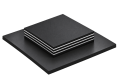
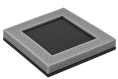
SLIDEBLOCK – reinforced elastomeric sliding bearing
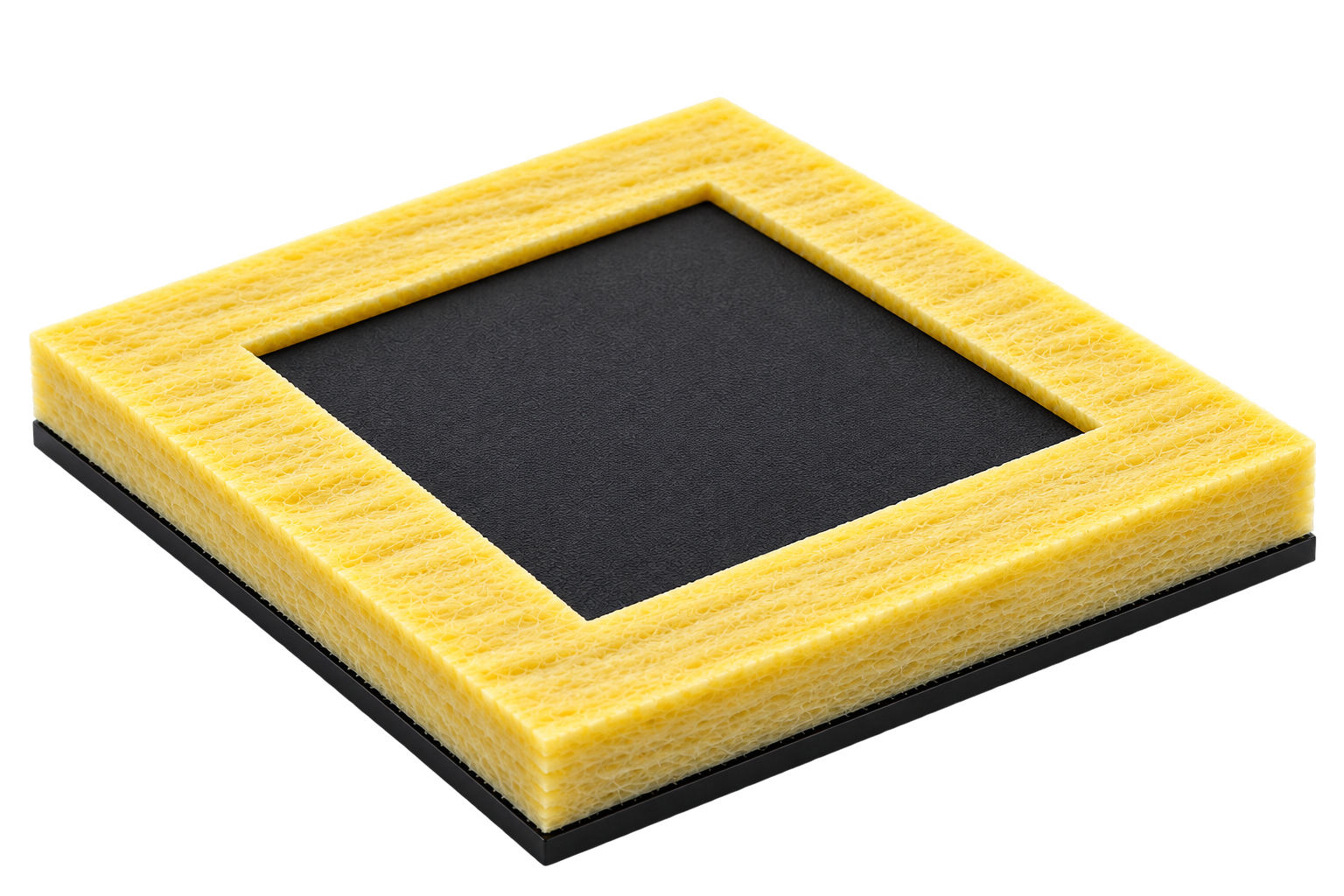
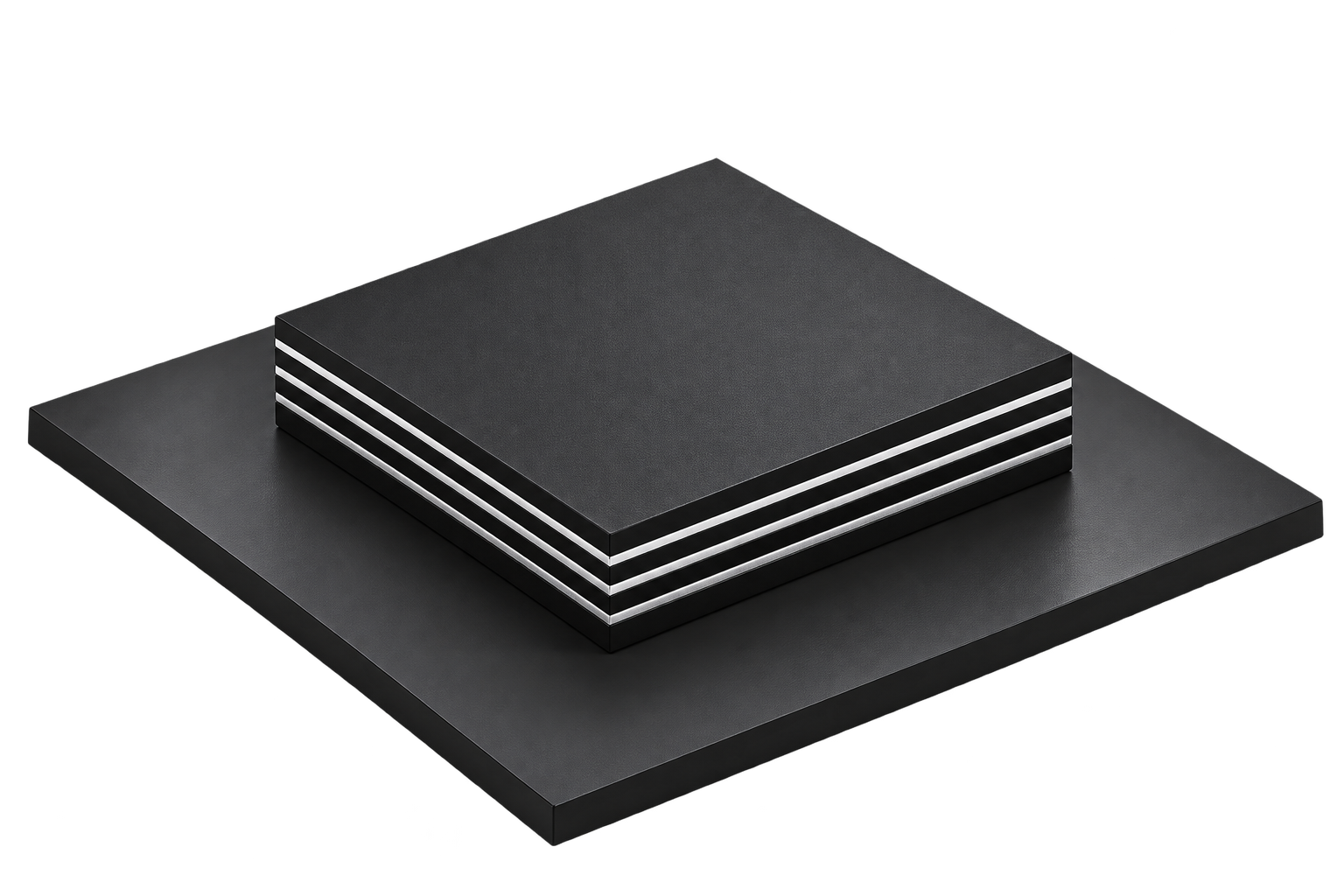
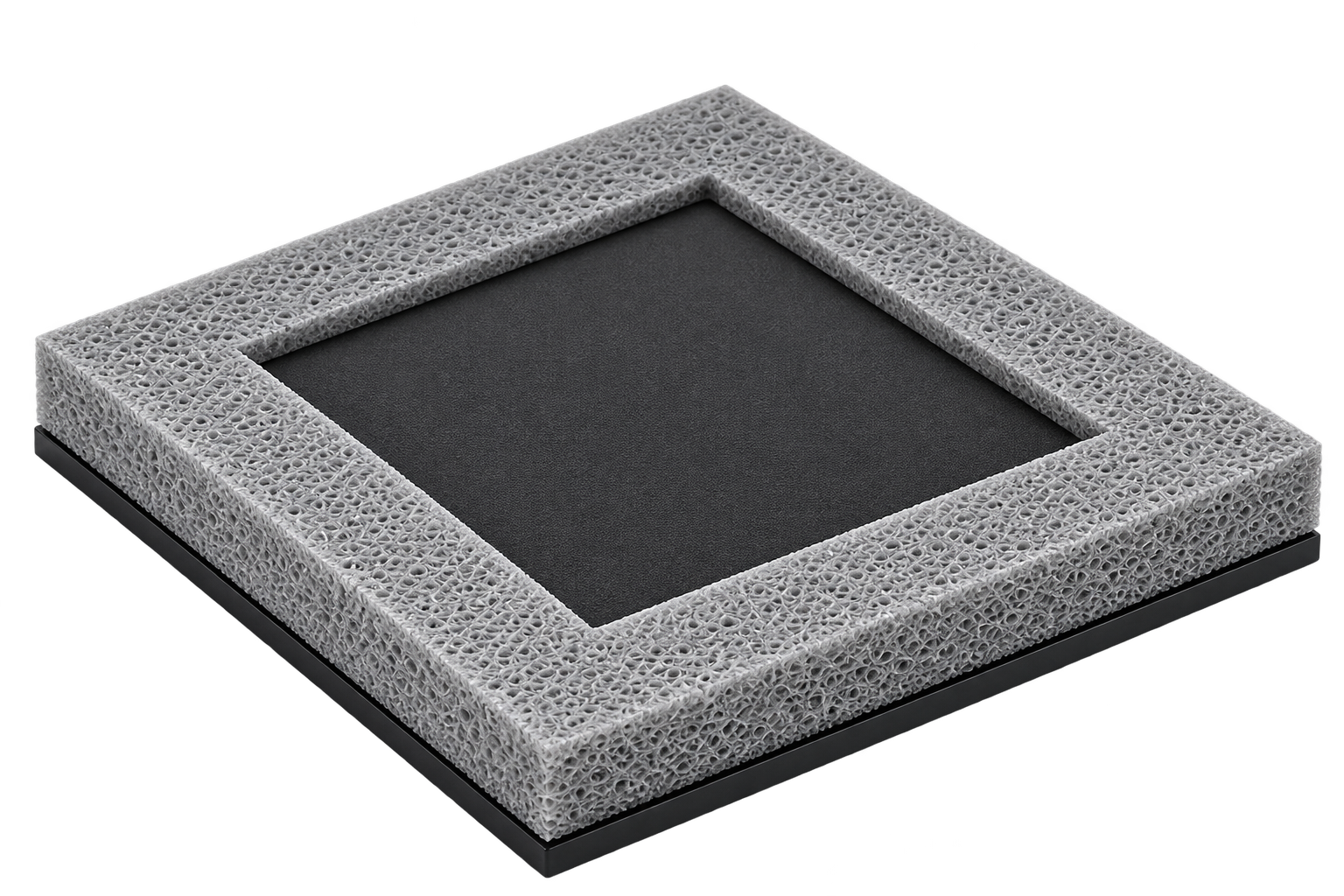
SLIDEBLOCK is a sliding bearing for supporting reinforced concrete and steel members where horizontal movements must not be restrained. The bearing consists of two separate parts: an upper steel-plate-reinforced elastomeric pad with a PTFE facing and a lower sliding plate made of engineering plastic or stainless steel. The pad carries the vertical load and accommodates irregularities of the bearing surfaces and rotation of the supported member, while movements caused by temperature changes, shrinkage and creep of concrete take place as the PTFE facing slides on the plate. The design compressive resistance is σR,d = 21 N/mm². The design table, friction coefficient graph, installation instructions and specification text are given in the SLIDEBLOCK technical data sheet (PDF).
Where SLIDEBLOCK is used
- Supports of precast concrete beams, girders and slabs.
- Supports of cast-in-place concrete structures (SLIDEBLOCK with a protective frame).
- Supports of steel structures.
Key properties of SLIDEBLOCK
- Design compressive resistance σR,d = 21 N/mm² for all thicknesses and sizes; verification FE,d ≤ FR,d = σR,d · a · b.
- Movement is not limited: sliding plate dimensions a1 = a + 2u, b1 = b + 2u according to the required movement u.
- Large movements are not taken up by shear deformation of the pad – the sliding plane remains stable.
- Permissible rotation αmax = 1000/a ‰ for t = 11 and 14 mm, and αmax = 2000/a ‰ for t = 18 and 20 mm (a – pad side in the direction of rotation, mm).
- Only the friction force H = μ · F is transferred to the support; any other horizontal forces must be resisted by separate structural measures.
- 70 Shore A elastomer reinforced with vulcanised-in steel plates; the sliding face is covered with a PTFE layer.
- Service temperature range from –35 °C to +70 °C.
Installation
- On reinforced concrete, the bearing is placed so that its whole area lies within the zone confined by the reinforcement of the supporting member – this protects the concrete edges from spalling. Concrete surfaces normally provide sufficient static friction, so no additional fixing is required.
- When the average compressive stress is below 3 N/mm², especially at temperatures below –20 °C, it is recommended to glue the sliding plate to the concrete member with construction adhesive.
- On steel bearing surfaces, both parts of the bearing are fixed to the adjacent structures, e.g. with welded-on stops or bolted brackets; the sliding plate can be installed at the bottom or at the top.
- For cast-in-place concrete, the bearing with a protective frame is used, which prevents concrete from entering the sliding zone.
- The bearing and the bearing surfaces must be clean – free from grease, oil, solvents, mortar and ice; the PTFE facing must be protected from scratches. Bearings must not be stacked on top of each other.
Dimensions and tolerances
The bearings are made to project dimensions: the pad dimensions a × b can be of any size, and the sliding plate size is determined by the required movement. The total bearing thickness including the sliding plate is 11, 14, 18 or 20 mm. The design table with permissible rotation angles by pad side (120–600 mm) is given in the SLIDEBLOCK technical data sheet (PDF). Tolerances: pad length and width ±2 mm, sliding plate length and width ±1 mm, total bearing thickness ±1 mm.
Frequently asked questions
What load can a SLIDEBLOCK bearing carry?
The design compressive resistance is σR,d = 21 N/mm² for all thicknesses and sizes. The pad dimensions a × b are selected from the condition FE,d ≤ FR,d = σR,d · a · b, where FE,d is the vertical design load.
What sliding travel does SLIDEBLOCK provide?
The movement is not limited – the sliding plate is made larger than the pad by the required movement in each direction: a1 = a + 2u, b1 = b + 2u, where u is the maximum movement in one direction.
What is the friction coefficient of SLIDEBLOCK?
Friction between the PTFE facing and the sliding plate depends on temperature and on the average compressive stress – for design, the upper values of the graph given in the data sheet are recommended. The bearing transfers only the friction force H = μ · F to the support; any other horizontal forces must be resisted by separate structural measures.
When is the version with a protective frame needed?
For cast-in-place concrete, the bearing with a protective frame is used – the frame prevents concrete from entering the sliding zone and blocking the movement. The version without a frame is supplied for precast and steel structures.
What is the difference between SLIDEBLOCK and SLIDEBLOCK HD?
Both bearings have the same construction and differ in load capacity: the design compressive resistance of SLIDEBLOCK is σR,d = 21 N/mm², while SLIDEBLOCK HD offers σR,d = 28 N/mm².
Related products
- SLIDEBLOCK HD – the same bearing construction for higher loads (σR,d = 28 N/mm²).
- SLIDELINE – elastomeric linear sliding bearing.
- All sliding elastomeric pads and strips.