
Elastomeric and sliding bearings to EN 1337-3
TYPE A–F are elastomeric and sliding bearings to EN 1337-3. They are mainly used in bridge and viaduct structures, and also in buildings where the design requires bearings to EN 1337-3. The bearings transfer vertical loads – and, where designed accordingly, horizontal loads – between elements of precast and cast-in-place concrete, steel and masonry structures. They accommodate rotation of the supported element; the sliding types also accommodate horizontal movement. We supply six bearing types, made to project dimensions. The bearings are CE marked and supplied with a Declaration of Performance (DoP). All data are given in the TYPE A–F technical data sheet (PDF).
Bearing types
| Type | Construction | Fixing to the structure |
|---|---|---|
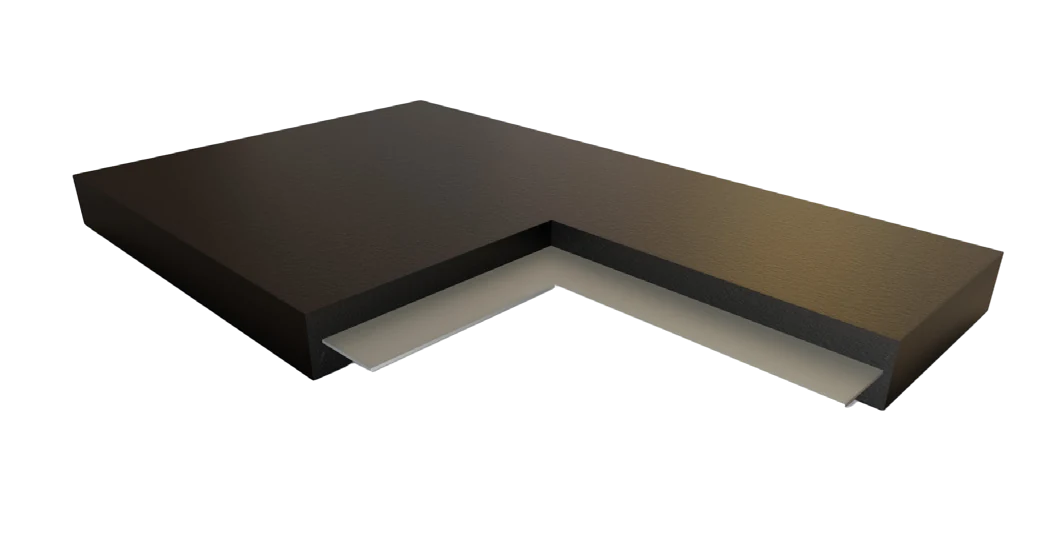
| TYPE A | Single steel plate embedded in elastomer | None |
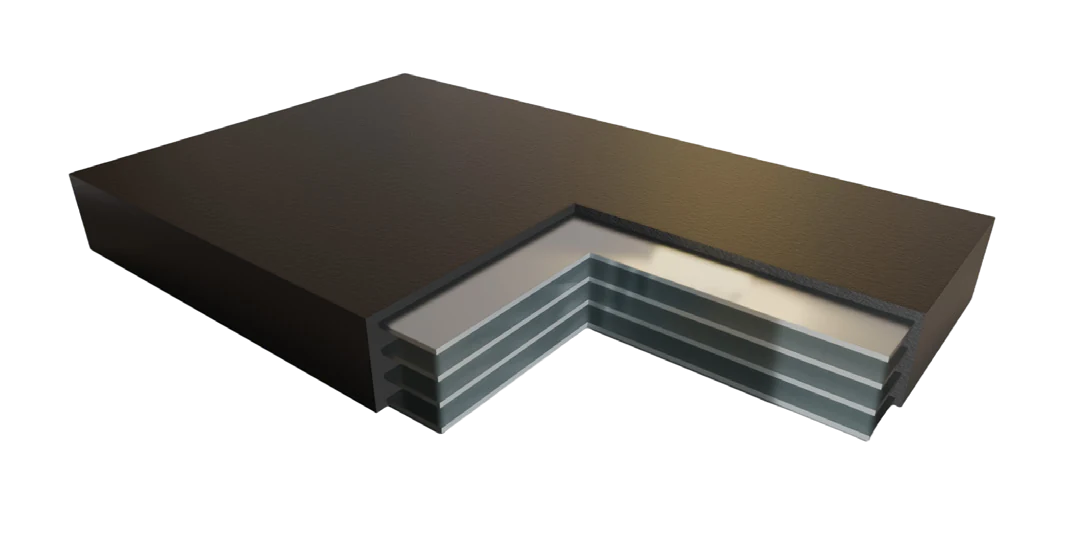
| TYPE B | Alternating elastomer and steel plate layers | None |
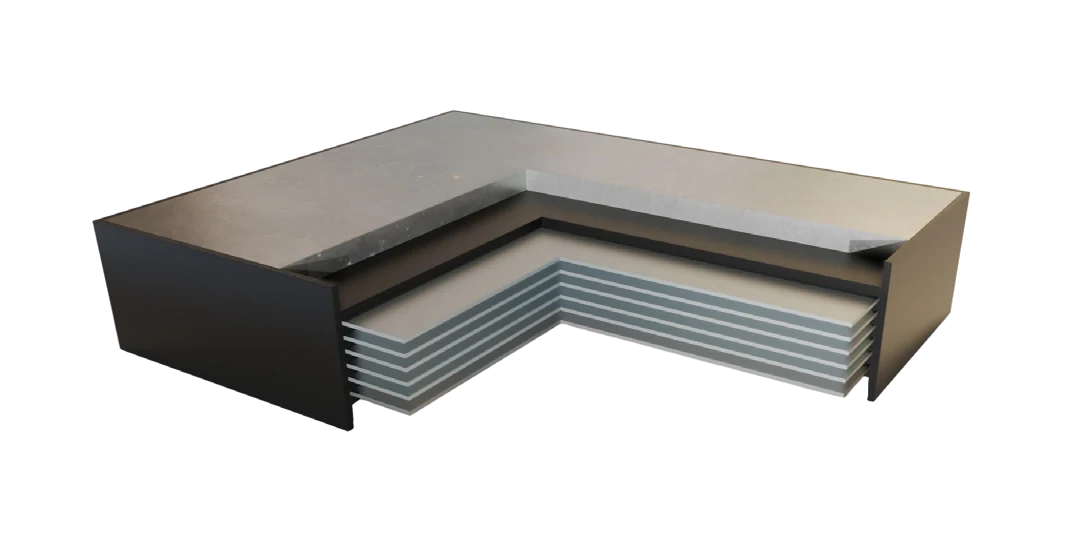
| TYPE C1 / C2 | Laminated bearing with 1 or 2 outer plates | Anchors through holes in the plates |
| TYPE D | Elastomer + PTFE + stainless steel plate | None |
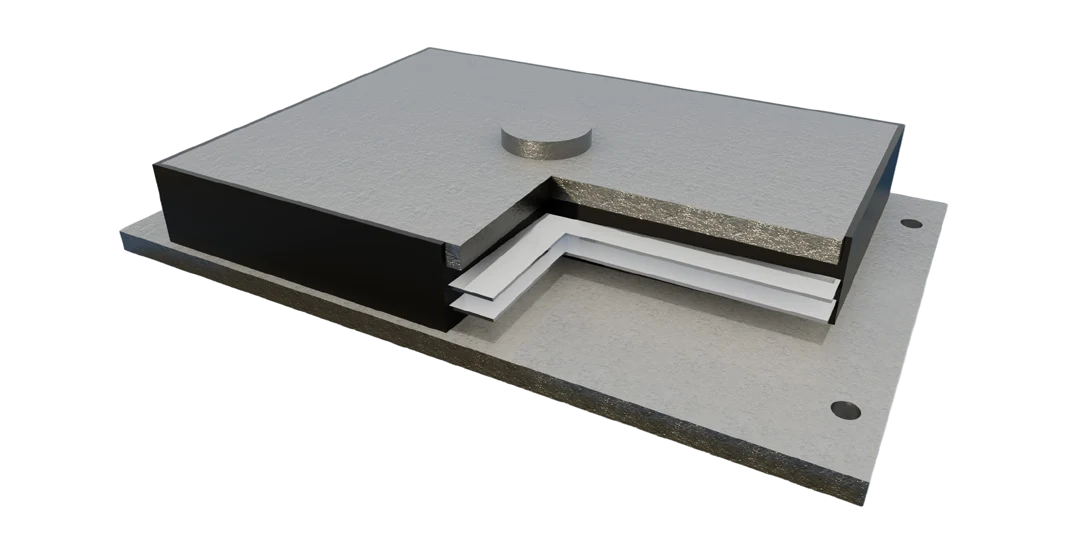
| TYPE E1 / E2 | E1 free / E2 guided sliding, ±50…±100 mm | Anchoring system and counterplates |
| TYPE F | Plain elastomer, also as strips | None |
Properties of the materials – natural rubber (NR), S235JR steel, PTFE and AISI 304L stainless steel – are given in the technical data sheet (PDF).
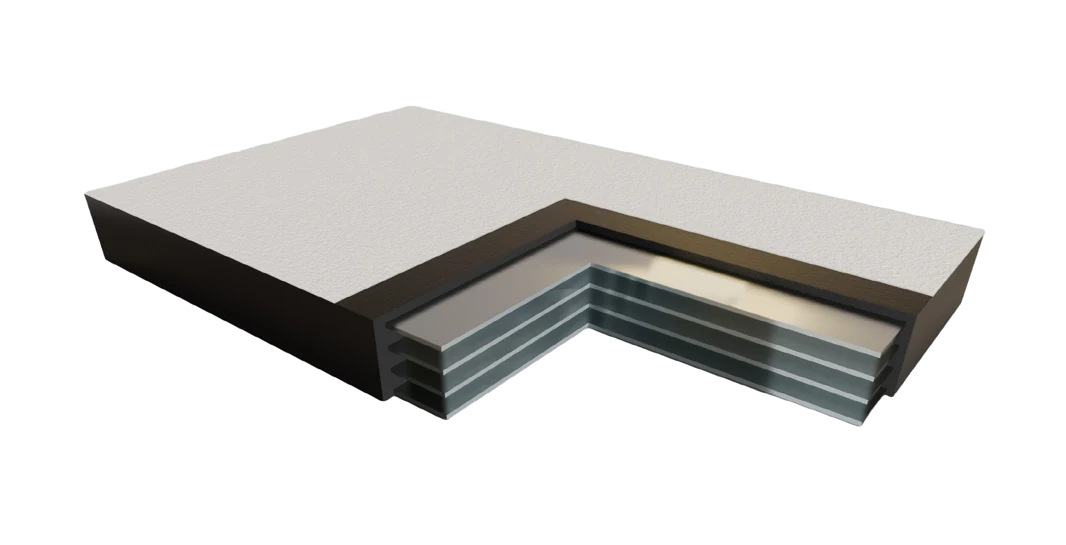
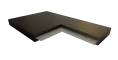
TYPE A – bearing with a single steel plate
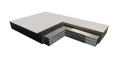
A single S235JR steel plate vulcanised inside natural rubber (NR). No mechanical fixing to the structure. Available in rectangular or circular shape.
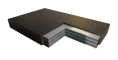
TYPE B – laminated elastomeric bearing
Alternating layers of natural rubber (NR) and S235JR steel plates, vulcanised inside the rubber. No mechanical fixing to the structure. Available in rectangular or circular shape.
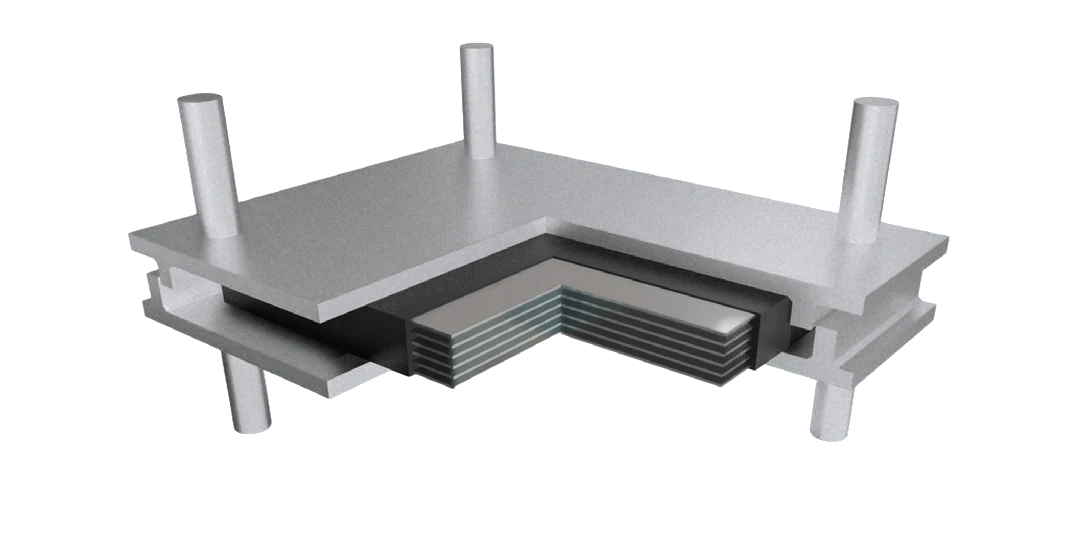
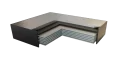
TYPE C – laminated bearing with outer plates
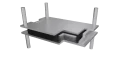
Laminated bearing (as TYPE B) with one (C1) or two (C2) outer plates of suitable thickness. The plates have holes for anchors that fix the bearing to the structure.
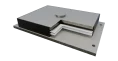
TYPE D – sliding bearing: elastomer + PTFE + INOX
A layer of plain NR or elastomer laminated with S235JR steel plates, vulcanised to a smooth or embossed PTFE sheet and covered with an AISI 304L stainless steel plate. Circular, square or rectangular; dimensions to order. No mechanical fixing to the structure.
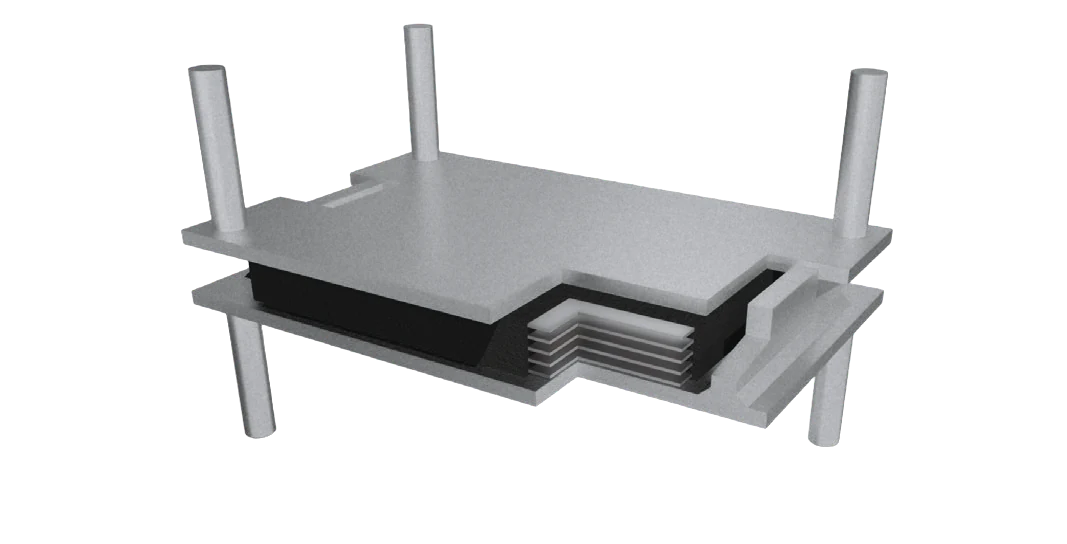
TYPE E – sliding bearing, displacements ±50…±100 mm
Layers of NR, S235JR steel plates, PTFE and AISI 304L, vulcanised inside the rubber. E1 – multidirectional (free sliding), resists higher horizontal loads than TYPE B. E2 – unidirectional (guided): resists higher loads in the restrained direction and behaves like TYPE B in the other direction. Installed with anchoring and counterplates.
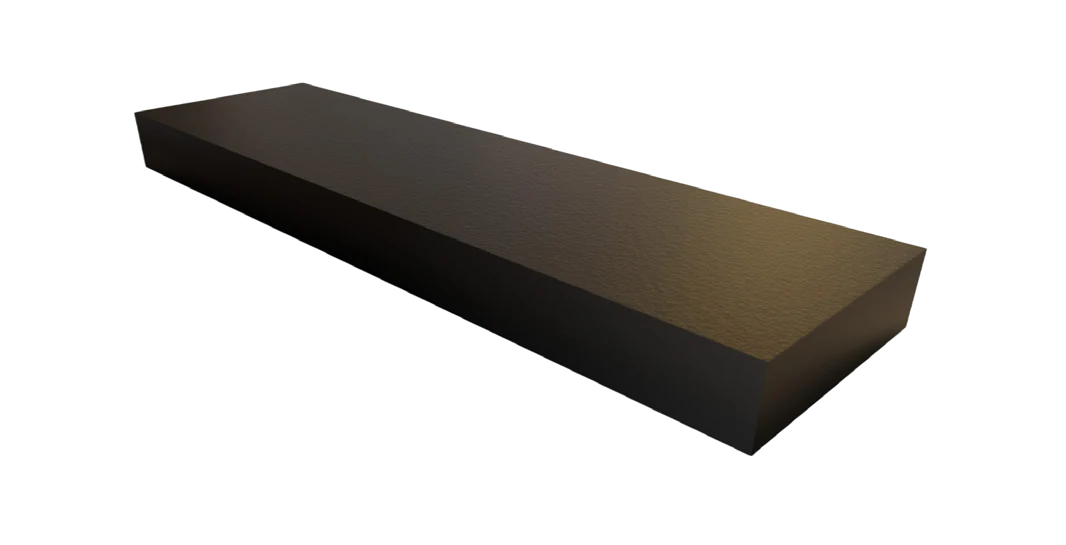
TYPE F – plain elastomeric bearing
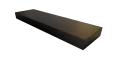
Bearing made entirely of natural rubber (NR). Available in various dimensions and thicknesses, with holes, and as strips. No mechanical fixing to the structure.
Where EN 1337-3 bearings are used
- Bridge and viaduct structures – bearings for beams and decks.
- Buildings where the design requires bearings to EN 1337-3.
- Supports between elements of precast and cast-in-place concrete, steel and masonry structures.
- Locations where the supported element must rotate and, with sliding bearings (TYPE D, TYPE E), also move horizontally.
Design and selection
Bearing dimensions and the number and thickness of elastomer layers and steel plates are selected according to the design loads, displacements and rotations. Verification to EN 1337-3 covers the total elastomer strain, steel plate stresses, rotation and stability conditions, and the non-sliding condition. For sliding bearings (TYPE D, TYPE E), friction between PTFE and stainless steel is also taken into account.
To select a bearing, provide the design loads, displacements and rotations or the bearing schedule – we will select a suitable bearing on that basis. For calculations, contact our engineering support.
Frequently asked questions
How do I choose the right bearing type?
By whether the bearing must be fixed to the structure and whether the supported element must move. TYPE A, B, D and F have no mechanical fixing, TYPE C is fixed with anchors through holes in the outer plates, and TYPE E is installed with an anchoring system and counterplates. Where the element must move, sliding bearings TYPE D and TYPE E are used (TYPE E for displacements of ±50…±100 mm). Send us the design loads, displacements and rotations – we will select a suitable bearing.
What is the difference between TYPE E1 and TYPE E2?
E1 is a multidirectional (free) sliding bearing that resists higher horizontal loads than TYPE B. E2 is unidirectional (guided): it resists higher loads in the restrained direction and behaves like TYPE B in the other direction. Both allow displacements of ±50…±100 mm and are installed with anchoring and counterplates.
Are circular bearings available?
Yes. TYPE A and TYPE B are available in rectangular or circular shape, TYPE D in circular, square or rectangular shape, and TYPE F in various dimensions and thicknesses, with holes, and as strips. Dimensions are selected for the project.
What materials are the bearings made of?
The elastomer is natural rubber (NR) with a hardness of 60 ± 3 IRHD and a shear modulus G = 0.9 MPa; the reinforcing plates are S235JR steel. Sliding bearings (TYPE D, TYPE E) use a PTFE layer with a dynamic coefficient of friction of 0.06 and an AISI 304L stainless steel plate. All material properties are given in the technical data sheet.
What information do you need for a quote?
The bearing type and shape, dimensions (if known), design vertical load (max and min), horizontal loads, displacements, rotation and quantity – or the bearing schedule. You can use the tender / specification text in the technical data sheet.